
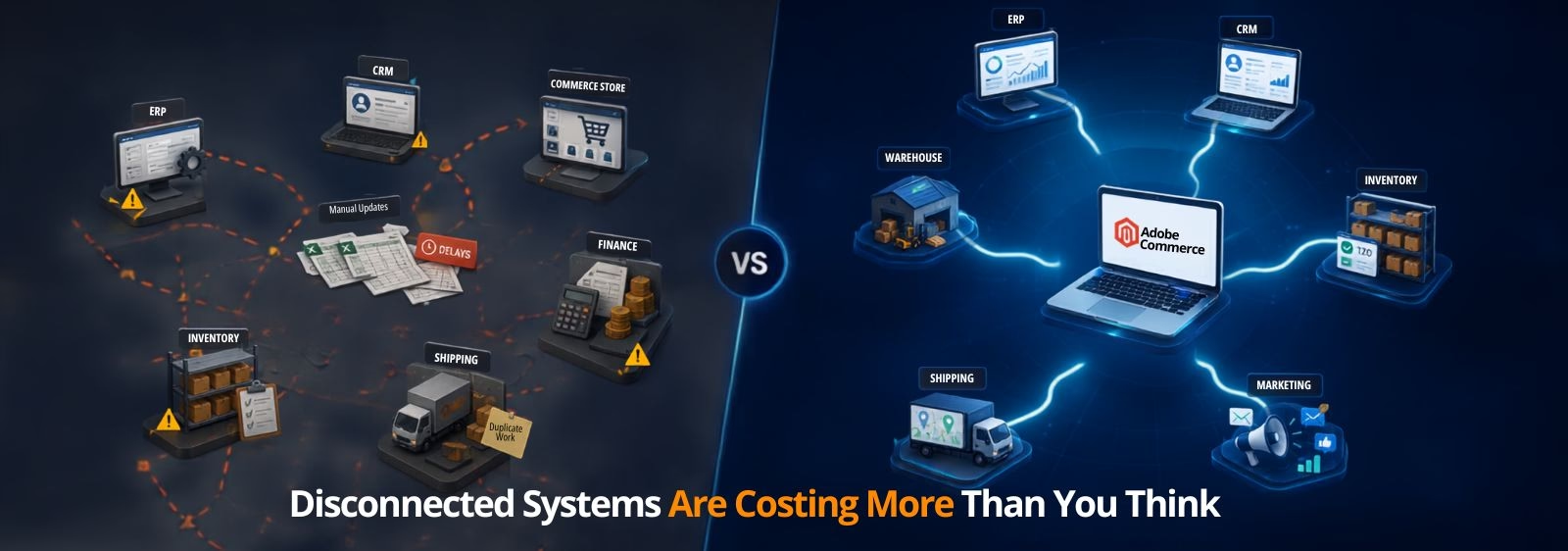
Growing an eCommerce business isn't just about attracting more customers or increasing sales. As order volumes rise, product catalogs expand, and new sales channels are added, operational complexity grows alongside the business. What once worked with a handful of daily orders often becomes inefficient when hundreds or thousands of transactions move through inventory, fulfillment, finance, customer service, and marketing every day.
Table of Contents
- The Hidden Costs Most Businesses Don't Measure
- Signs Your Commerce Systems Are Holding Growth Back
- How Disconnected Systems Affect Business Performance
- Where Connected Commerce Delivers the Greatest Business Value
- Connected Commerce Systems vs. Disconnected Systems
- A Practical Example
- Building a Connected Commerce Strategy
- Prioritize the Workflows That Matter Most
- ERP Integration: Improving Operational Control
- CRM Integration: Creating a Complete Customer View
- eCommerce Automation: Reducing Manual Work Without Losing Control
- Adobe Commerce Integration: Connecting the Entire Commerce Ecosystem
- Common Challenges to Plan For
- Questions to Ask Before You Begin
- Connected Commerce Is an Investment in Long-Term Growth
- A Practical Roadmap to Connected Commerce
- Final Thoughts
- Frequently Asked Questions
Many businesses invest in improving the customer-facing experience through better website design, faster performance, stronger SEO, or paid advertising. These investments are important, but they address only one part of the customer journey. After an order is placed, multiple business systems need to work together to process payments, update inventory, fulfill orders, communicate with customers, and generate accurate reports. When those systems don't share information effectively, employees begin filling the gaps manually, creating hidden operational costs that become more expensive as the business grows.
These operational gaps rarely appear as major technical failures. Instead, they emerge through everyday manual work, delayed information, and disconnected workflows that gradually reduce efficiency across the business.
This is where connected commerce systems become essential. By allowing business-critical platforms such as your commerce platform, ERP, CRM, warehouse, and fulfillment systems to exchange information automatically, businesses can eliminate data silos and improve operational efficiency. Rather than every department maintaining its own version of the truth, inventory, orders, customer records, payments, and operational data remain synchronized across the business. The result is better visibility, faster decision-making, fewer manual interventions, and an operational foundation that supports sustainable growth.
This growing need for connected data isn't just an operational concern. According to Salesforce, 73% of customers expect companies to understand their unique needs and expectations, making unified customer and operational data a critical foundation for delivering consistent commerce experiences. Rational data is a critical foundation for delivering consistent commerce experiences.
The Hidden Costs Most Businesses Don't Measure
When evaluating technology investments, businesses usually compare software licensing costs, implementation budgets, or subscription fees. Those expenses are easy to calculate because they appear on invoices and financial reports. What often goes unnoticed is the cost of employees spending part of every working day compensating for systems that don't communicate with one another.
Consider a retailer selling through an Adobe Commerce store, online marketplaces, and wholesale channels. Orders arrive from multiple sources, inventory changes continuously, customers contact support, and finance records hundreds of transactions. If the commerce platform, ERP, CRM, warehouse, and fulfillment systems aren't connected, employees spend valuable time verifying information, reconciling data, switching between applications, and correcting inconsistencies instead of focusing on activities that improve customer experience and business growth.
These activities don't improve customer experience or generate additional revenue. They simply keep day-to-day operations running. As businesses expand into new markets, add warehouses, or introduce new sales channels, these inefficiencies grow alongside the business, increasing operational costs, slowing decision- making, and making future growth more difficult to manage.
Signs Your Commerce Systems Are Holding Growth Back
Disconnected commerce systems rarely fail overnight. Instead, operational inefficiencies build gradually until manual work, delayed processes, and inconsistent data begin affecting day-to-day operations. If several of the following situations sound familiar, your commerce ecosystem may no longer support the needs of your growing business.
- Inventory levels frequently differ between your commerce platform and ERP.
- Orders require manual review before they can be fulfilled.
- Customer service teams switch between multiple applications to answer a single inquiry.
- Marketing relies on spreadsheets instead of real-time customer data.
- Finance spends hours reconciling reports from different systems.
- Different departments report different numbers for the same business metrics.
These issues may appear unrelated, but they often point to the same underlying challenge: business-critical systems operating independently instead of sharing reliable, real-time information.

How Disconnected Systems Affect Business Performance
The impact of disconnected commerce systems extends well beyond the IT department. Every manual process, delayed update, or inconsistent record creates friction that affects day-to-day operations and, ultimately, the customer experience.
| Business Function | Impact of Disconnected Systems | Business Outcome |
|---|---|---|
| Inventory Management | Delayed or inconsistent stock updates | Overselling, stockouts, and reduced customer confidence |
| Order Processing | Manual validation and duplicate data entry | Slower fulfillment and higher operating costs |
| Customer Service | Customer information spread across multiple systems | Longer response times and inconsistent support |
| Marketing | Incomplete or outdated customer data | Less effective segmentation and personalization |
| Finance | Manual reconciliation across multiple platforms | Slower reporting and reduced decision-making confidence |
Identifying these operational challenges is only the first step. The next priority is understanding how connected commerce systems, supported by ERP and CRM integration, and Adobe Commerce, eliminate these inefficiencies and create a more scalable operating model.
Where Connected Commerce Delivers the Greatest Business Value
Connected Commerce Systems deliver the greatest value by removing friction from the everyday processes that keep a business running. Instead of relying on manual work to bridge the gaps between disconnected applications, integrated systems enable information to flow automatically between departments. This improves operational efficiency, supports faster decision-making, and creates a stronger foundation for sustainable growth.
Operations and Inventory
Operations teams rely on accurate inventory and order data to keep products moving efficiently. When stock updates are delayed or inconsistent, fulfillment slows, inventory discrepancies increase, and employees spend valuable time manually verifying product availability before orders can be processed.
With effective ERP integration, inventory movements are synchronized across the commerce platform, warehouse, and ERP system. This reduces manual intervention, improves order accuracy, and helps operations scale more efficiently as order volumes increase.
Customer Service
Customers expect fast, accurate answers regardless of where they place an order. When customer records, order history, and shipment information are spread across multiple systems, support teams spend more time searching for information than resolving customer inquiries.
A connected commerce environment provides a unified customer view, allowing support representatives to access order history, shipment status, and previous interactions from a single interface. Faster access to reliable information leads to quicker resolutions, more consistent service, and an improved customer experience.
Marketing
Successful marketing depends on accurate and complete customer data. When systems operate independently, duplicate records, incomplete purchase histories, and inconsistent customer profiles make audience segmentation and personalization less effective.
Through CRM integration, customer data from the commerce platform, marketing automation tools, and customer service systems is consolidated into a unified profile. This enables more accurate audience segmentation, personalized campaigns, and better reporting based on reliable customer insights.
Finance and Reporting
Finance teams depend on accurate, timely data to reconcile transactions, monitor business performance, and support strategic planning. When financial and Operational information is distributed across multiple platforms, reporting becomes slower and more reliant on manual reconciliation.
Connected commerce systems automate the flow of financial and operational data between applications, improving reporting accuracy and reducing administrative effort. Instead of spending time validating reports, finance teams can focus on analyzing performance, identifying opportunities, and making informed business decisions.
Connected Commerce Systems vs. Disconnected Systems
The difference between disconnected and connected commerce systems goes beyond integrating software. It creates an environment where every department works from the same reliable, real-time information, enabling faster decisions, more efficient operations, and a better customer experience.
| Business Area | Disconnected Commerce Systems | Connected Commerce Systems |
|---|---|---|
| Inventory | Stock updates are delayed or inconsistent. | Inventory remains synchronized across channels and systems. |
| Order Processing | Manual validation and duplicate data entry. | Automated workflows improve speed and accuracy. |
| Customer Data | Information exists across multiple platforms. | A unified customer profile supports every department. |
| Reporting | Reports require manual reconciliation. | Reliable data enables faster business decisions. |
| Customer Experience | Delays and inconsistent communication. | Faster, more accurate service builds customer confidence. |
| Business Growth | Growth increases operational complexity and manual work. | Connected workflows support efficient, scalable business growth. |
The objective of Connected Commerce Systems isn't simply to integrate applications. It's to create a connected business where information flows seamlessly across departments, operational friction is reduced, and every team can make faster, more informed decisions while delivering a consistently better customer experience.
A Practical Example
Imagine an online retailer preparing for a seasonal sales event. Marketing drives record traffic, orders increase rapidly, and several products become best sellers within a few hours.
Without Connected Commerce Systems, inventory updates aren't synchronized across the commerce platform, ERP, and warehouse systems. Products continue appearing as available after they've already been allocated, leading to fulfillment delays, customer inquiries, refund requests, and missed sales opportunities. Teams spend valuable time resolving operational issues instead of supporting customers and managing demand
Now consider the same promotion with Connected Commerce Systems in place. Inventory updates are synchronized automatically, orders move directly into fulfillment, customer information stays current, and every department works from the same real-time data. Instead of reacting to preventable problems, teams can focus on delivering a seamless customer experience and keeping operations running efficiently.
The success of the promotion isn't determined by marketing alone. It's also shaped by the ability of the underlying commerce ecosystem to support increased demand without creating operational bottlenecks. Connected Commerce Systems provide the visibility, automation, and reliability businesses need to scale confidently as they grow.
Building a Connected Commerce Strategy
Many businesses assume improving system integration requires replacing their existing technology or undertaking a large-scale digital transformation project. In reality, the most successful connected commerce systems initiatives focus on improving how existing systems exchange information rather than replacing them. As part of a broader digital transformation strategy, businesses often invest in digital commerce solutions that connect commerce platforms with ERP, CRM, fulfillment, and analytics systems to create a more scalable and efficient operating model.
The objective isn't to connect every application at once. Instead, it's to identify the workflows that create the greatest operational friction and eliminate the manual processes surrounding them. This phased approach delivers measurable improvements early, reduces implementation risk, and minimizes disruption to day-to-day operations.
For most businesses, the first step is understanding how information moves through the organization. Mapping the journey of an order from purchase to fulfillment often reveals where employees manually transfer data, validate information, or rely on spreadsheets to bridge gaps between systems. These workflows typically represent the greatest opportunities for improving efficiency, reducing operational costs, and building a more scalable commerce ecosystem.
Prioritize the Workflows That Matter Most
Every business has different operational priorities, but the most successful Connected Commerce initiatives start by improving the workflows that have the greatest impact on customers and day-to-day operations. Rather than modernizing every process at once, businesses should focus on the integrations that deliver measurable efficiency gains while creating a foundation for long-term growth.
A practical starting point includes:
- Synchronizing inventory across all sales channels.
- Automating order flow between the commerce platform and ERP.
- Connecting customer records through CRM integration.
- Improving financial reporting by reducing manual reconciliation.
- Eliminating spreadsheet-based processes wherever possible.
Focusing on these priorities delivers immediate operational improvements while building a scalable foundation for broader eCommerce automation initiatives.
ERP Integration: Improving Operational Control
For growing businesses, the ERP system manages essential functions such as inventory, purchasing, finance, procurement, and fulfillment. Its effectiveness, however, depends on receiving accurate, real-time information from the commerce platform and sharing that data across the wider business.
Without effective ERP Integration, inventory discrepancies increase, financial reconciliation becomes more time-consuming, and order processing often relies on manual validation. These inefficiencies reduce operational visibility and increase costs.
When the ERP is fully integrated with the commerce ecosystem, inventory, orders, purchasing, and financial data move automatically between systems. This improves reporting accuracy, streamlines fulfillment, and gives decision-makers greater confidence through reliable, real-time information.
CRM Integration: Creating a Complete Customer View
Customers interact with businesses through online stores, customer support, email campaigns, and sales teams. When this information is scattered across multiple platforms, no department has a complete understanding of the customer journey.
Effective CRM integration brings these interactions together into a unified customer profile, giving marketing, sales, and support teams access to consistent, up-to-date customer information. This improves personalization, strengthens customer retention, and enables more informed business decisions.
As integration requirements become more complex, many businesses invest in professional ERP & CRM integration services to build scalable workflows, reliable API connections, and long-term operational stability.
eCommerce Automation: Reducing Manual Work Without Losing Control
The purpose of eCommerce Automation isn't to replace people. It's to eliminate repetitive, rule-based tasks so employees can focus on higher-value work.
Common examples include:
- Updating inventory automatically after every sale.
- Routing orders directly into fulfillment.
- Synchronizing customer records between the commerce platform and CRM.
- Sending shipment updates and transactional notifications automatically.
- Updating pricing and product information across connected sales channels
By automating routine processes, businesses improve efficiency, reduce manual errors, and allow teams to focus on customer relationships, problem-solving, and continuous improvement.
Adobe Commerce Integration: Connecting the Entire Commerce Ecosystem
Adobe Commerce is designed to support sophisticated digital commerce experiences, but its full potential is realized when it's connected to the systems that manage the rest of the business. Businesses with complex operational requirements often work with experienced Adobe Commerce Development Services partners to design scalable integrations, streamline workflows, and ensure the platfor supports long-term growth rather than becoming another disconnected system.
An effective Adobe Commerce Integration enables inventory, orders, customer information, pricing, payments, shipping updates, and financial data to move seamlessly between the storefront and backend systems. Instead of maintaining separate records across departments, businesses operate from a single, reliable source of information.
This becomes increasingly valuable for organizations managing multiple warehouses, supporting B2B operations, expanding internationally, or selling across multiple marketplaces. New sales channels can be integrated into an existing commerce ecosystem without introducing unnecessary operational complexity.
Common Challenges to Plan For
Building Connected Commerce Systems is rarely limited by technology. More often, the biggest challenges come from inconsistent data, legacy applications, and business processes that have evolved around disconnected systems over time. Identifying these challenges before implementation helps create a smoother integration journey and reduces project risk.
Before beginning an integration initiative, evaluate:
- The quality and consistency of existing customer and product data.
- Legacy systems with limited integration capabilities.
- Custom workflows that may require specialized development.
- Duplicate records created across multiple applications.
- Internal processes that rely heavily on manual intervention.
Identifying these challenges early reduces implementation risk, improves project outcomes, and helps ensure integration efforts deliver measurable business value rather than simply connecting software.
Questions to Ask Before You Begin
Before investing in new integrations or automation, take a step back and evaluate how your business operates today. Answering a few practical questions can help identify where Connected Commerce Systems will deliver the greatest business value.
- Which manual processes consume the most employee time?
- Where do inventory or order discrepancies occur most frequently?
- Which departments rely on spreadsheets to complete daily tasks?
- Which business decisions are delayed because reliable data isn't immediately available?
These questions help shift the conversation from technology to business outcomes, making it easier to prioritize initiatives that improve operational efficiency, enhance customer experience, and support long-term business growth.
Connected Commerce Is an Investment in Long-Term Growth
Most businesses don't intentionally create disconnected systems. They evolve over time as new platforms, sales channels, and operational tools are introduced to support growth. While each system may perform its individual role effectively, the lack of reliable information sharing between them gradually creates operational inefficiencies that become more difficult to manage as the business expands.
Building Connected Commerce Systems changes that dynamic. By connecting inventory, orders, finance, customer data, and fulfillment, businesses create a more efficient operating model where information flows seamlessly across departments. The result is greater visibility, faster decision-making, improved customer experiences, and a stronger foundation for sustainable growth.
The goal isn't to integrate every application simply because it's possible. It's to build a commerce ecosystem that supports business objectives, reduces operational friction, and enables teams to focus on delivering value to customers. Whether you're planning an Adobe Commerce Integration, modernizing legacy systems, or improving ERP Integration and CRM Integration, the most successful initiatives begin with a clear business strategy rather than a technology-first approach.
A Practical Roadmap to Connected Commerce
Every business starts from a different point, but successful Connected Commerce initiatives typically follow a phased approach focused on delivering measurable business value.
- Assess your current workflows. Identify where inventory, order, customer, and financial data move between systems and where manual intervention occurs.
- Prioritize high-impact integrations. Focus first on workflows that directly improve customer experience and operational efficiency, such as inventory synchronization, order processing, and customer data management.
- Improve data quality before automation. Standardize customer records, product information, and inventory data to ensure automated processes operate reliably.
- Measure business outcomes. Track improvements in order accuracy, fulfillment speed, inventory accuracy, reporting efficiency, and customer satisfaction to evaluate the success of your Connected Commerce strategy.
A phased approach reduces implementation risk, delivers measurable improvements at every stage, and creates a scalable foundation for long-term business growth.
Final Thoughts
Disconnected commerce systems rarely prevent businesses from growing, but they often determine how efficiently that growth can be sustained. As operations become more complex, manual processes, disconnected data, and inconsistent reporting consume valuable resources that could otherwise be invested in customer experience, innovation, and expansion.
Connected Commerce Systems help eliminate these barriers by ensuring business-critical information flows reliably across the organization. Rather than asking employees to bridge the gaps between applications, integrated systems automate routine processes, improve visibility, and create a more resilient operational foundation.
For businesses looking to scale with confidence, connected commerce is no longer just an operational improvement. It's a strategic investment that supports better decision-making, stronger customer experiences, and sustainable long-term growth.
If your teams still rely on spreadsheets, manual order validation, or disconnected reporting, a Connected Commerce assessment can quickly identify where operational friction is slowing growth. Our team at Navigate Commerce helps businesses evaluate existing workflows, prioritize integrations, and build scalable commerce ecosystems that support long-term growth.
Whether you're planning your first integration project or modernizing an existing commerce ecosystem, the right strategy starts with understanding where your current systems create friction. Identifying those opportunities early can help you build a connected, scalable, and future-ready business.

Frequently Asked Questions
What are Connected Commerce Systems?
Connected Commerce Systems integrate your commerce platform with ERP, CRM, inventory, fulfillment, finance, and other business applications, allowing data to flow automatically across the organization. This reduces manual work, improves data accuracy, and gives every department access to consistent, real-time information for better decision-making.
Why is ERP integration important for eCommerce businesses?
ERP integration connects your commerce platform with core business functions such as inventory, purchasing, finance, and order management. By synchronizing data across these systems, businesses improve inventory visibility, reduce manual data entry, streamline operations, and make more informed business decisions.
How does CRM integration improve customer experience?
CRM integration creates a unified customer profile by connecting purchase history, support interactions, marketing engagement, and account information. With a complete view of each customer, businesses can deliver faster support, more personalized experiences, and consistent communication across every touchpoint.
What is eCommerce Automation?
eCommerce automation uses connected systems to automate repetitive, rule-based tasks such as inventory updates, order routing, customer data synchronization, shipment notifications, and reporting. This improves operational efficiency, reduces manual effort, and minimizes the risk of human error.
Can Adobe Commerce integrate with existing ERP and CRM systems?
Yes. Adobe Commerce supports integration with a wide range of ERP, CRM, payment, shipping, warehouse management, and third-party business applications. The right integration approach depends on your technology stack, business processes, and operational requirements.
How do you know if your business needs a connected commerce strategy?
If your teams regularly rely on spreadsheets, manually verify orders, reconcile reports across multiple systems, or struggle with inconsistent inventory and customer data, it's a strong indication that your business could benefit from a connected commerce strategy. Addressing these challenges early helps improve operational efficiency, support better customer experiences, and create a stronger foundation for future growt